Portland Waffle Window

When we heard my sisters family rave about the “Waffle Window” we knew we’d have to give it a try.  And we were surprised to see that it actually is, simply, a window– and there is an outdoor seating area under a awning.

Choosing what to order off the menu was a bit difficult–there were so many interesting-looking treats.  And we were happy to see that there were both savory and sweet waffles.  Jeremy declared that’s what made the place a legitimate restaurant, not just a novelty thing.

The first waffle we got was called “The 3 B’s”.  It had brie, bacon and basil on it served with a side of peach jam.

I can’t even describe how delicious this waffle was.  It was my favorite of the day.  The saltiness, along with the deep herb flavor, topped with just a hint of sweet jam–delicious!

We’re seriously considering making waffles like this at home.

We also got a sweet waffle called the “Banana Rumba”.  It had bananas, granola and a banana caramel sauce topped with whipped cream.  It was very good as well, though it was not very sweet.  That would be perfect for eating as a meal because you don’t want to get sugared out, but we got this one as “dessert” so I felt like I wanted a bit more of the banana caramel sauce on top!

The real treat was these chocolate-dipped waffles.  These were what we ordered for the boys.  They are dipped in chocolate on one side and then frozen and wrapped in paper.  They call these (and their plain pearl-sugar option) “walking waffles”  because they are portable and ready to eat on the go.

After living in our town for 6 years we’ve worn out our local restaurant options, it was a lot of fun to try some new places on vacation.  If When we  move to the Pacific Northwest, we will be visiting the waffle window again!

Blueberry Love

When we went blueberry picking it was hard to not be impressed by the volume of berries we were collecting. As my bucket filled I thought–what are we going to do with this many berries? Because in Kansas blueberries are a luxury. They are $4 for a small plastic clamshell, so we occasionally buy them when on sale and sprinkle over yogurt or snack on them delicately. . .

But what do you do with a bucket of blueberries?

Well, you make pie.

Three over the course of the week, actually. Two blueberry pies the first night, and a single blueberry sour cream pie later in the week after most of the family had left. Both delicious with a scoop of Pacific Northwest’s fine Tillamook vanilla ice cream.

The next morning my brother-in-law treated us to homemade blueberry pancakes, while I whipped up a batch of my mom’s favorite buttermilk syrup.  (It was a much needed respite from our hotel’s continental breakfast.)

But of course a few of us also had leftover pie for “second breakfast.”

My sister won us all over with a batch of her spiced blueberry jam. I love tasting it after hearing her talk about it the last two years–we’ve never tried mailing each other preserves, but I may have to request we start!

And of course there were plenty of berries to be eaten raw. We even packed some back with us, snacking on them at the airport when our reunion came, sadly, to an end.

Why I am not Devoted to Organic (part two)

The organic movement has important and valuable goals, but it doesn’t cover everything. I already explained my choice for buying less-processed food over more-processed organic food products. Today the rationale is about sustainability and community.

We’ve been buying organic milk for a while but recently decided to switch to milk from a local farm and creamery instead.  The farm is within a half hour from us, but all the local stores carry the milk.

They sell all varieties of milk–whole down to skim.  They even sell “creamline milk” which means it is non-homogenized and is what our home cheesemaking books recommend for best results.  They also sell flavored milk (like chocolate) and even sell eggnog from November through the New Year (though I prefer mine homemade).  They also sell little quarts of cream.

The milk comes in glass bottles which help to naturally keep the milk cooler and more fresh, you return the bottles to the store for a $2.75 return on the bottles.  So while it seems like the milk costs as much as organic milk –you get half of it back.  Plus it is just really cool to send the bottles back to be reused–even though we took all our plastic milk cartons to the recycling center–this still seems better.  The dairy trucks drop off fresh milk and pick up the rinsed out bottles in the same trip, so though I’m sure it uses more fuel on the return trip, they aren’t making extra trips for the bottles.

The cows of this farm are fed a diet primarily grown by the farmers themselves on their farmland.  If cows are sick they are treated in seclusion until they are healthy and their milk is clean.  All the milk from the farm is lab-tested on-site to be antibiotic-free.  So–though it is not “organic” there are a lot of things that we really like about this two brothers, plus wives, plus children-run family business.

Supporting local agriculture and communities is something we value highly.  It’s interesting to read about the farm and their ideals and how they felt like they could choose to become a big factory-farm or just try to really specialize and do something really well, providing a great resource to the community and actually being members of the community by things like holding farm tours, and fall-festivals, and even selling soft-serve ice cream from the on-site farm store for fun.

So maybe it would be better if the milk was organic-but maybe not.  Maybe it would be better if it was raw? I’m not so sure–I do know of a local farm that sells raw milk (which can only be sold direct from the farm in the state of Kansas) but I’m still un-decided on the topic of raw.  Jeremy wants his own cow and I’m sure if we had our own cow we would drink the milk raw. . .   But the last issue is that of grassfed versus everything-else-fed.  If we could find a source of dairy products from grass-fed cows that would be my first choice–what I would consider to be the best option–even if it was not organic.

So generally I am choosing to support local and [more] sustainable over organic.  The same holds true for a local flour mill–it’s not organic, but it’s local, it’s supporting family-sized businesses, and the flour from the local mill comes in 25 pound-bags which is more economical and has less waste.  (That is another big pet peeve of mine for organic products–many of them are packaged in such small portions as to not make the price overwhelming–but for my family of five those portion sizes are not realistic and mean a lot more packaging waste by my using them.)

I didn’t get to the “what” and “whys” of the organic that I do buy, so that will have to be another post for another day, but now I’m off to  spend time with my family and enjoy our Christmas festivities.  I’ll return to writing my Urban Pioneer Story here later next week.

Happy Holidays!

Building Community

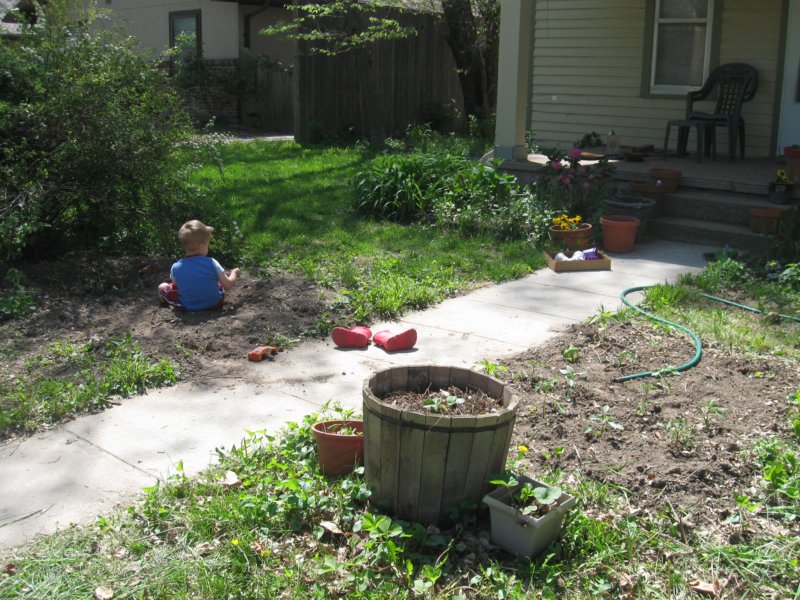
Every year we’ve planted a garden we’ve tried to start our own plants from seeds, and every year that process has been an almost complete flop.

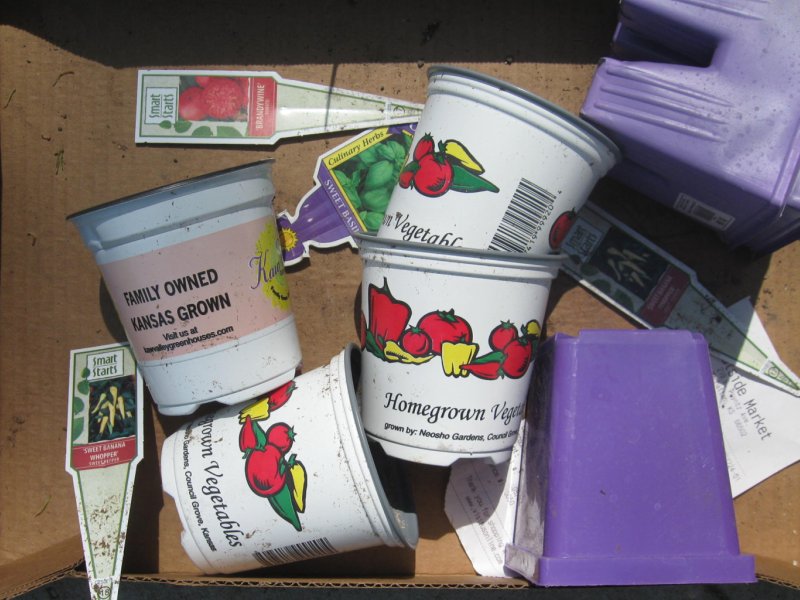
Since our germination experiments have all  failed, we bought a lot of plant starts this year from a local market. It’s not the most inexpensive place to buy plants in town, but we felt good about supporting a local business, and I realized that by going to this market we were supporting the local business model twofold, because many of the starts they sell are grown right here in Kansas.

As I was planting I contemplated, the idea of independence versus interdependence. One reason why we garden is for a greater sense of independence. A feeling that we don’t have to be dependent for our basic needs on large corporations with centers of production far far away from us. There’s lots situations where this food distribution model could be a problem. Bad weather, social/political unrest, or fuel prices and availability could all interfere with our ability to receive basic commodities from far away sources. So, we should just provide it all ourselves–right?

Working in my small garden I thought about how at least right now (while the greenhouse of my dreams exists only in my dreams) I’m really just not set up to grow plants from seeds, so I am happy that someone else who is better equipped to do so can provide that for me. I’ve realized many times along our path to greater self-reliance that it will be impossible for us to ever provide absolutely everything for ourselves, and complete isolation is not what we really want, either.

As we work to provide for many of our own needs we are working to get away from a dependance on large businesses and nonsensical models of commodities distribution.  What we would like to participate in is an interdependent relationship with smaller, local businesses.  We need them to provide us with things that we are unable to–yet they also need us and so we are treated with respect and even friendship.  As I worked in the garden I thought that “interdependence” still seemed like too institutional a word for the relationship I was imagining.

A better word is community.  People working together for a joint cause–the cause being the health of the community, or the community’s members.  People working hard to provide the things they can, getting help where their abilities fall short, and always supporting those around them.  In a small way, I hope that buying Kansas seedlings from the local market when my own growing attempts have failed, will help to build that community.

Design a site like this with WordPress.com
Get started